
Part II: pgLang and the Politics of Ownership in a Reparative Economy
If we want the wealth generated by culture to truly circulate among its creators, we have to go beyond visibility—we have to talk about infrastructure and examine the mechanisms of power behind the art.
Cultural expression can move hearts, but can it also move money, power, and ownership? If the culture is the engine, who owns the vehicle? For Black artists especially, the stakes are high: too often, their creative labor is extracted for mass consumption while the profits bypass their communities entirely.
We explored in PART I
how Kendrick Lamar uses the spectacle of performance to critique the very systems he moves through—how his art invites us to question who profits from our joy, our pain, and our attention. But spectacle alone isn’t enough. Cultural critique without structural change can become just another act in the show. The real shift happens when artists begin to challenge the underlying architecture of the industry itself.
This is where Kendrick’s next move becomes instructive. He’s not just performing within the spectacle—he’s actively restructuring the business behind it. In 2020, Kendrick and his longtime business partner Dave Free made a dramatic move: they left the powerhouse label TDE (Top Dawg Entertainment) that launched Kendrick’s career, and founded a new venture called pgLang.
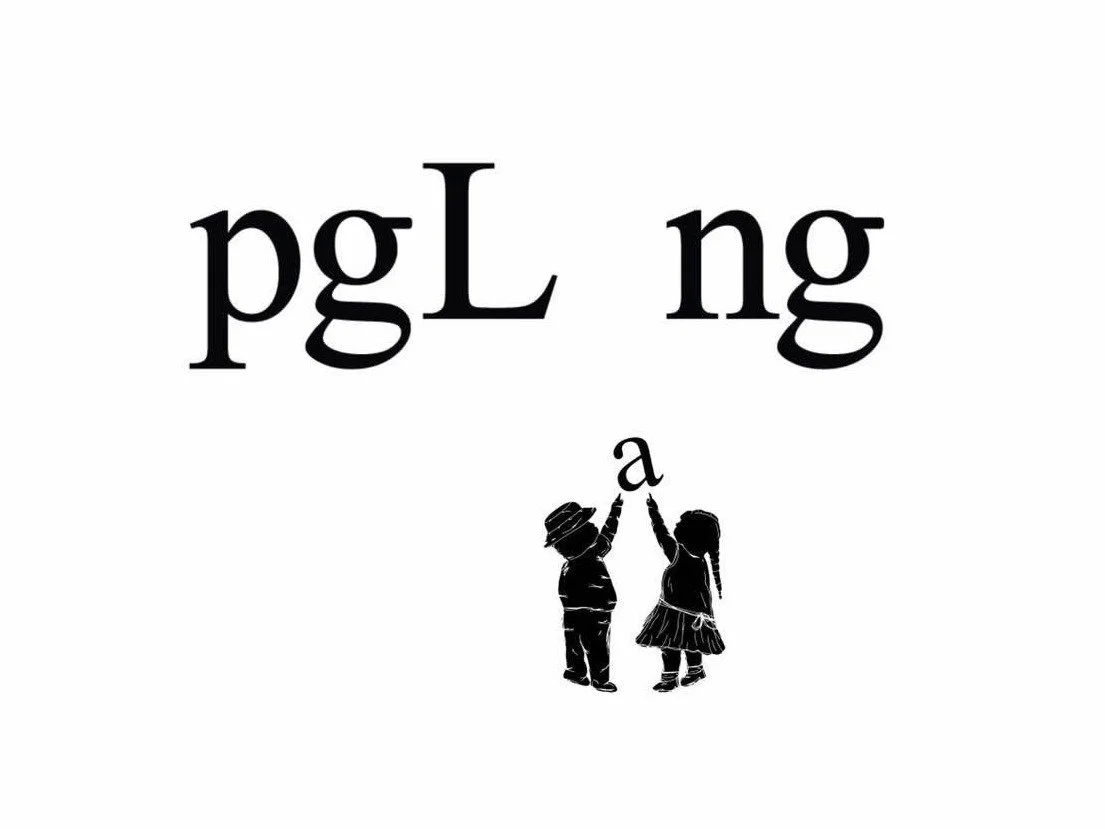
pgLang’s Logo leans into the aspect of being a creative collective and the push to take charge of your own narrative
At the time, nobody quite knew what pgLang was. Kendrick’s cryptic announcement called it a “multilingual, artist-friendly, at service company,” pointedly, not just a record label. In a press release, Dave Free clarified that pgLang is “not a record label, a movie studio, or a publishing house. This is something new.” Instead, pgLang positions itself as a creative collective and communications company focused on storytelling across music, film, TV, art, you name it. Free said they are “cultivating raw expression from grassroots partnerships.”
In plain English: pgLang is about letting artists—especially Black artists—control their own narratives and own as much of the process as possible, from creation to distribution.
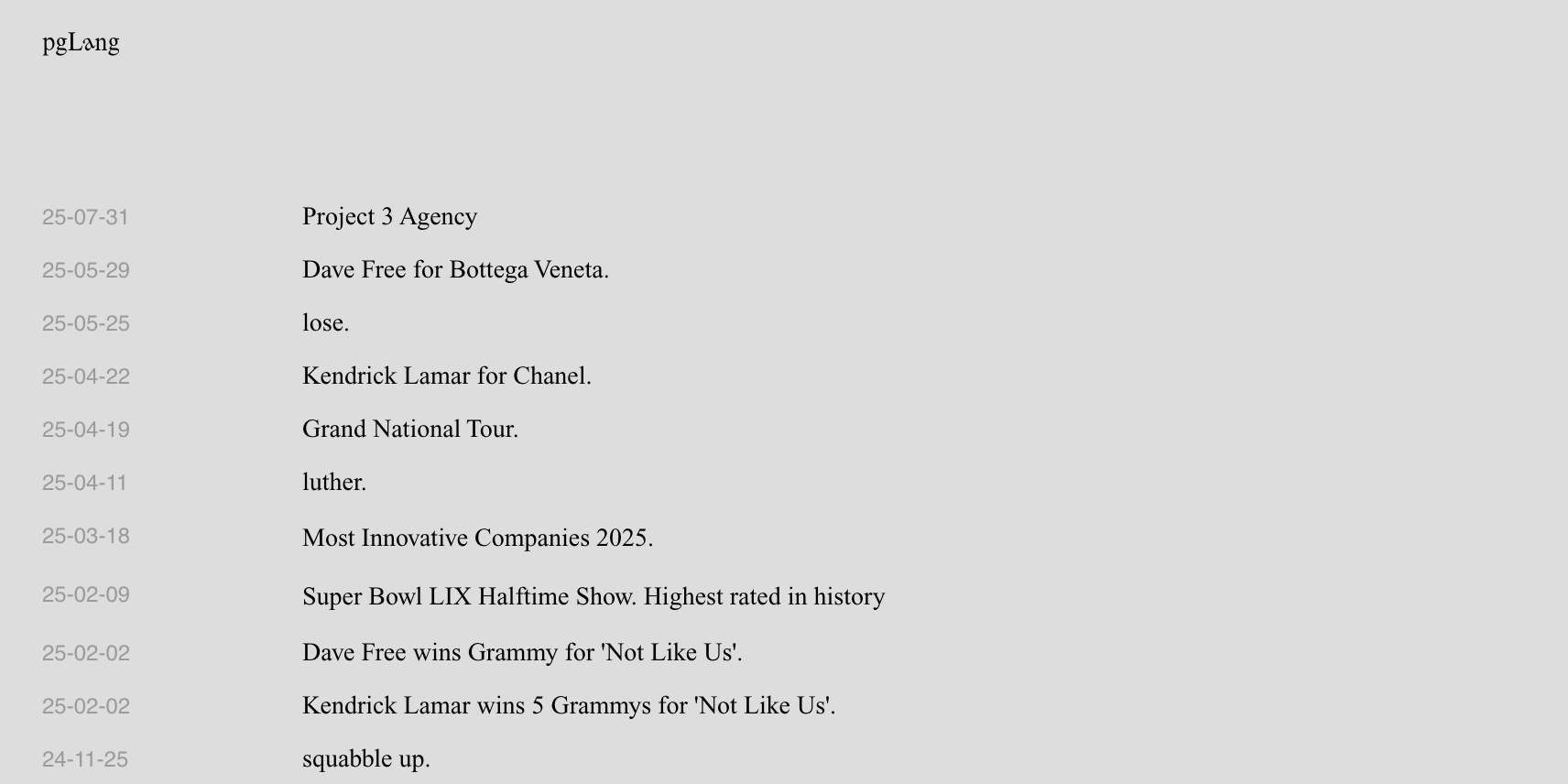
pgLang’s homepage takes a timeline documenting styled approach, showcasing their work
In launching pgLang, Kendrick effectively vertically integrated his empire. He’s not just a rapper on someone else’s label; he’s a label-owner, a content producer, a creative director. pgLang quickly showed its range: they manage artists like Baby Keem (Kendrick’s cousin and protégé), produce short films and music videos, and even snagged high-profile ad campaigns (more on that in a second). It’s a model of Black ownership in an industry that has historically profited off Black talent while keeping the ownership (and profits) in non-Black hands.
Kendrick and Free are flipping that script. The ethos is very much ‘DIY, but make it deluxe’. They are intentionally controlling the means of production so that the culture-creators also get to build the wealth. In terms of reparative finance, this shift is huge: it’s not just about teaching financial literacy to artists; it’s about changing who holds the equity, the masters, the intellectual property. As Kendrick might put it, we need to own our masters, not just learn how to master our money. True liberation in entertainment requires shifting ownership, not just giving artists a bigger allowance from the corporate overlords.
That said, pgLang operates within capitalism, not outside it. We all do. We can’t expect artists to reinvent the financial system we’ve inherited. So yes, they still partner with giant brands and tech platforms that arguably extract value from Black culture. For instance, pgLang’s early projects included a slick ad campaign for Calvin Klein and a content deal with Amazon. From Spotify to concert promoters like Live Nation, the music industry infrastructure is still very much in play.
So one could ask: Is full freedom possible within corporate capitalism?
Kendrick’s answer seems to be to push the boundaries from the inside. With pgLang, he’s created a vessel to carry his vision on his own terms as much as possible. It’s an experiment in carving out space for authentic expression and equitable profit-sharing, even while navigating the larger capitalist ocean. Kendrick and Free are essentially hacking the system by using corporate money and distribution to fuel their agenda (rather than vice versa), modeling a future where Black creatives control the board. It’s not a perfect solution, but it’s a bold start toward reparative economics in the culture sector.
Sponsorships with Purpose: The Cash App Example
Every move Kendrick makes is calculated, extending even, to the corporate logos he aligns with. Case in point: when planning his recent tours (The Big Steppers Tour in 2022 and the Grand National Tour in 2025), Kendrick eschewed the typical luxury brand sponsorships. No Chase Sapphire Lounge, no AmEx VIP Club. Instead, he partnered with Cash App, the mobile payment service that’s become ubiquitous in communities often ignored by big banks.
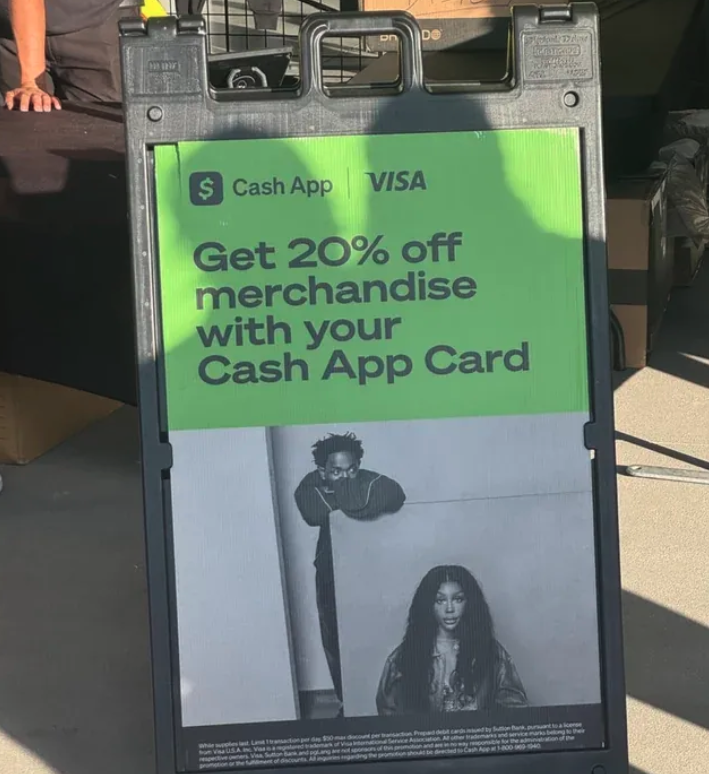
Source: Reddit, r/KendrickLamar
This raised some eyebrows: Cash App isn’t the “fanciest” sponsor out there. But that was exactly the point. As one industry observer noted, “He could’ve easily gone with a big-name brand like Chase… but those brands don’t speak to his people like Cash App does. This isn’t about prestige or platinum perks. This is about connecting with a platform that’s become a lifeline for the underbanked, especially in the Black community. Kendrick’s choice isn’t just strategic—it’s cultural.” In other words, Kendrick put his money (or rather, his brand) where his mouth is. He’d rather rep “the Bank of the People” than some elite credit card, because Cash App is actually used by the folks he speaks to in his music—people who might not have traditional bank accounts, who face barriers with legacy financial institutions, but can instantly send $20 to a cousin in need with a simple app.
By elevating Cash App, Kendrick was amplifying a tool of economic accessibility instead of flexing exclusivity. Kendrick’s partnership with Cash App went beyond just logos on a poster. In 2022, pgLang produced a short film/commercial for Cash App titled “The Balcony.” It’s a humorous little vignette: Kendrick and comedian, Exavier TV, are chilling on a balcony after Exavier blew a bunch of money on a bad bet. Up pops billionaire investor Ray Dalio (yes, the hedge fund guy, in on the joke) to give some grandfatherly financial advice. Dalio basically explains how Exavier could grow his money steadily by starting with small, safe investments that compound over time.
“The moral of the story? Slow money wins.”
A decidedly un-flashy message, but one aimed at educating viewers on basic investing and the power of compound interest. The ad, co-written by Kendrick and pgLang, is witty and accessible. It was part of Cash App’s “That’s Money” campaign to promote financial literacy. And it worked—”The Balcony” spot won two Cannes Lions advertising awards and was widely shared online. Kendrick essentially translated financial advice into cultural slang, bringing Dalio’s Wall Street wisdom to a barbershop banter setting.
However, it’s worth noting what “The Balcony” doesn’t mention. Nowhere in that ad is there a nod to the systemic issues that make financial literacy far from a level playing field. There’s no discussion of racist redlining in housing loans, or the lack of capital access for Black entrepreneurs, or how predatory lending has targeted Black communities for generations. The advice Dalio gives of ‘investing gradually and thinking long-term’ is solid, but it’s Financial Literacy 101 scrubbed free of any historical context. One could see this as a missed opportunity for Kendrick to inject some hard truths about economic inequity (imagine a line about how Exavier’s grandpa couldn’t get a mortgage in 1965 because of the color of his skin).
But Kendrick chose a soft power approach here. He slipped a medicine pill inside the candy: using a friendly ad to get folks thinking about savings and investments, perhaps as a first step before they confront the harsher truths. It shows how carefully Kendrick calibrates his message depending on the medium. A Super Bowl performance might confront America with its sins, but a fintech ad sticks to teaching the basics.
Even in taking corporate money, Kendrick seems to ask, “How can we bend this toward our people’s needs?” In the end, his Cash App play was savvy on multiple levels. He got tour funding from a company aligned with his audience’s interests. Cash App, in turn, got cultural cachet by association with a beloved artist. And fans got a signal that Kendrick is thinking about their real-life financial lives, not just selling them luxury fantasies. It’s a small example of how reparative finance values can sneak into the mainstream: co-opting corporate sponsorship to promote tools and knowledge that actually help the community.
Kendrick’s every brand choice, from his Nike Cortez sneakers to partnering with Cash App, is a cultural statement. In a world where artists often just grab the biggest check, Kendrick asks:
What’s the message in the money? Who is this deal really serving? Those are questions more artists, and indeed more investors, funders, and philanthropists, should be asking.
